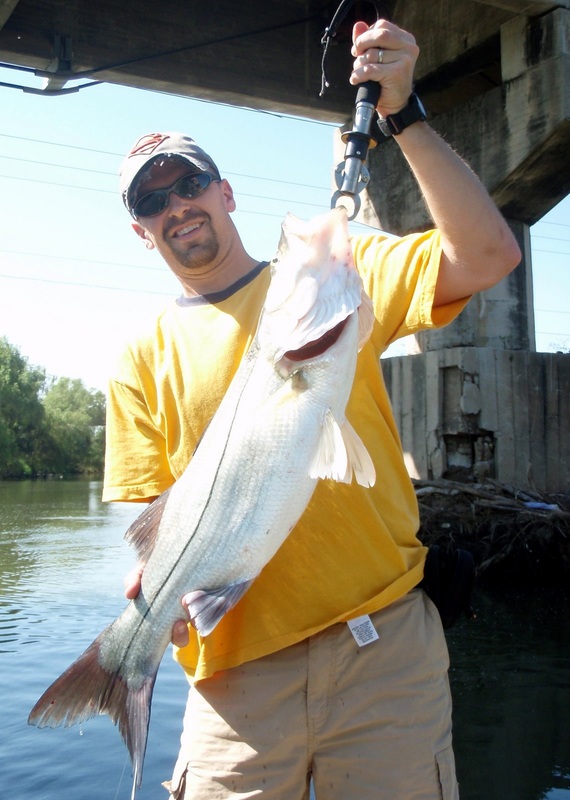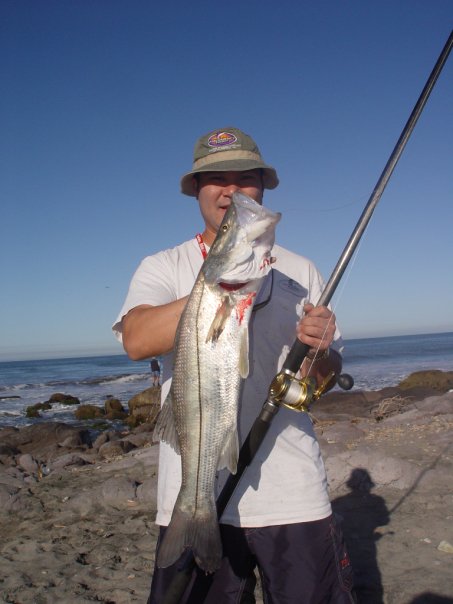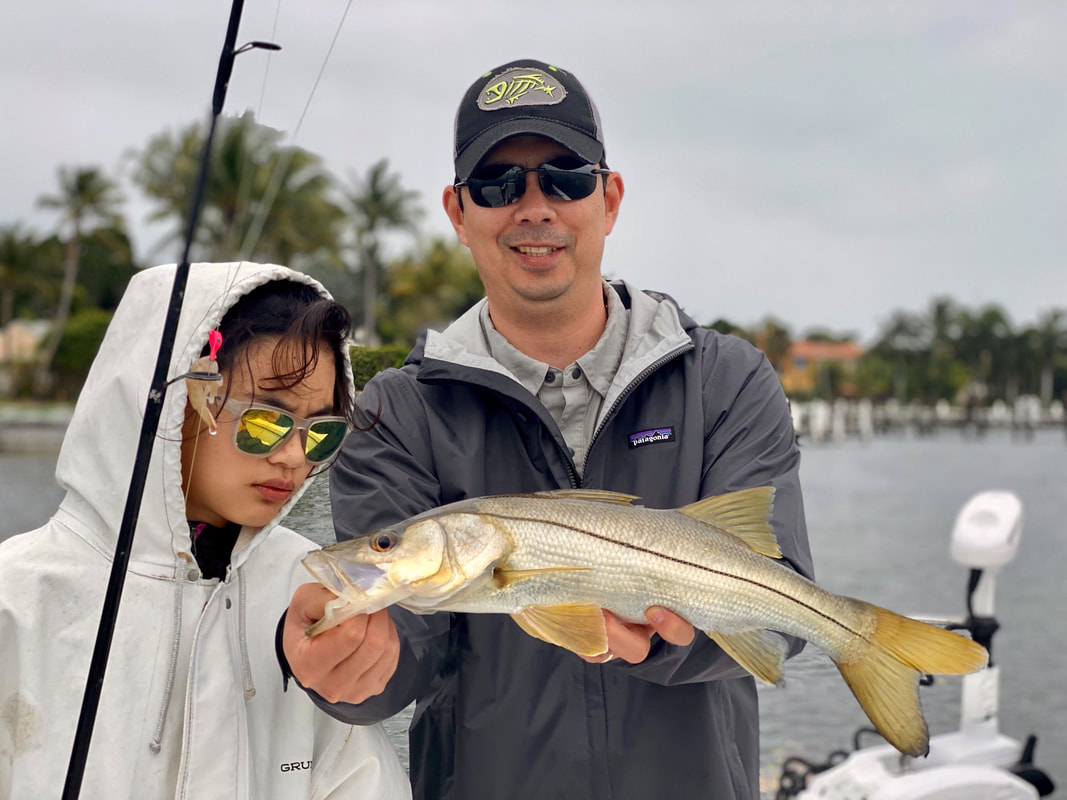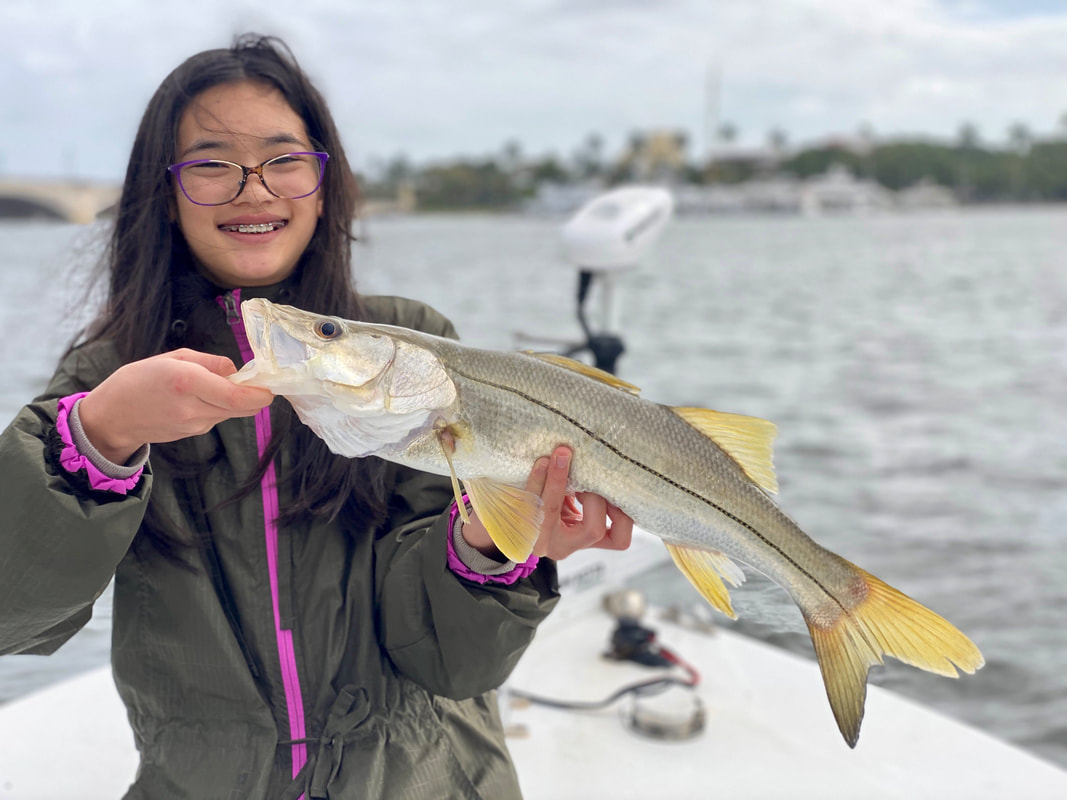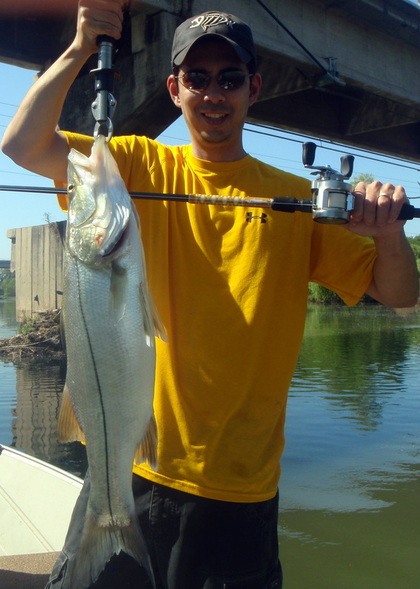
Snook caught in Puerto Vallarta, Mexico
Snook
Centropomus undecimalis
HOME
Other Species
Snook Description
Snook are a wily inshore gamefish that are caught on both the Pacific and Atlantic sides of North and South America. They generally live in mangroves, under docks and bridges, and around other types of inshore cover and structure. Their very pronounced lateral line (hence their nickname "linesiders" helps them detect prey movement even in very murky water. They can be found in both fresh and salt water and are a very popular gamefish wherever they are found. There are several species of Snook, varying in size in both the Pacific and Atlantic, but I have unceremoniously lumped them together for simplicity for this article.
Snook feed primarily on small fish and crustaceans like shrimp. They are ambush predators and make a distinctive "thump" when they hit a lure or bait. Once hooked, they put up a spirited fight that often includes some gill-rattling jumps and dogged runs.
Snook do not have teeth but do have a sharp gill plate you have to watch out for. They can usually be lipped like Largemouth Bass. Although often released, they do taste delicious. They are heavily regulated in most parts of the US, so make sure you are aware of local regulations on limits.
Snook Pound for Pound Fight Rating - 7 out of 10 on the Saltwater Scale
Snook are a very sporty gamefish and put up a solid tussle when hooked. The big ones are always threatening to wrap you up in pilings or other structure and break you off, and all of them jump and try to shake the hook.
Snook Culinary Rating - High
If you decide to keep some small ones for the table, they taste great. Snook have white meat with a medium firmness. Remove the skin before cooking.
Snook Tackle
I would recommend a light saltwater spinning or baitcasting setup. 30lbs braid should cover most situations, with a fluorocarbon leader between 15-40lbs depending on the size of the fish and the water clarity. I generally like to use circle hooks since I release most fish. The Daiwa Certate is my favorite spinning reel. Shimano makes some good round baitcasters for this type of fishing.
Centropomus undecimalis
HOME
Other Species
Snook Description
Snook are a wily inshore gamefish that are caught on both the Pacific and Atlantic sides of North and South America. They generally live in mangroves, under docks and bridges, and around other types of inshore cover and structure. Their very pronounced lateral line (hence their nickname "linesiders" helps them detect prey movement even in very murky water. They can be found in both fresh and salt water and are a very popular gamefish wherever they are found. There are several species of Snook, varying in size in both the Pacific and Atlantic, but I have unceremoniously lumped them together for simplicity for this article.
Snook feed primarily on small fish and crustaceans like shrimp. They are ambush predators and make a distinctive "thump" when they hit a lure or bait. Once hooked, they put up a spirited fight that often includes some gill-rattling jumps and dogged runs.
Snook do not have teeth but do have a sharp gill plate you have to watch out for. They can usually be lipped like Largemouth Bass. Although often released, they do taste delicious. They are heavily regulated in most parts of the US, so make sure you are aware of local regulations on limits.
Snook Pound for Pound Fight Rating - 7 out of 10 on the Saltwater Scale
Snook are a very sporty gamefish and put up a solid tussle when hooked. The big ones are always threatening to wrap you up in pilings or other structure and break you off, and all of them jump and try to shake the hook.
Snook Culinary Rating - High
If you decide to keep some small ones for the table, they taste great. Snook have white meat with a medium firmness. Remove the skin before cooking.
Snook Tackle
I would recommend a light saltwater spinning or baitcasting setup. 30lbs braid should cover most situations, with a fluorocarbon leader between 15-40lbs depending on the size of the fish and the water clarity. I generally like to use circle hooks since I release most fish. The Daiwa Certate is my favorite spinning reel. Shimano makes some good round baitcasters for this type of fishing.
Snook Techniques
Snook are often caught by pitching lures or baits near docks or other inshore cover/structure. They are extremely sensitive to tidal movements so keep that in mind when you are fishing for them. Different areas will fish well on different tides so be sure to check with the locals (assuming they will tell you the truth). In general, you want the tide to be moving just like most inshore fishing. Fishing at night, especially around the full moon, can be very productive.
As an illustration of their sensitivity to tides, I was once fishing the inshore canals in Venice, Florida at night. I was fishing with an excellent guide (contact info below) and we could see literally thousands of snook hanging out under the lighted boat docks. However, they refused every live bait we threw at them. The guide was unperturbed and remarked that the tide would change at 9:10pm and then they would start feeding. Sure enough, at exactly 9:10pm the tide started moving the other way, the snook all turned to face the current, and they started feeding like crazy as if a light switch had been flipped on. I caught a few on every cast for about an hour before I got bored after landing around 25 or so between 3-6lbs. We then went and caught some ladyfish to use for bait for larger snook later on. Once the tide changed again, the snook turned the other directly and would not give a second glance at any bait cast their way. The fish were all in the same spots, but on the wrong tide they were impossible to catch and on the right tide they were impossible not to catch.
In most of Central America, river mouths are a good bet for targeting snook if they haven't been netted into oblivion. Unfortunately, Snook are very susceptible to netting.
Snook Lures
Most of the snook I have caught on lures have been on bucktail jigs with plastic tails attached. This seems to be a popular approach in Central America. Soft plastic lures such as Jerk Shads and DOA Shrimp often also work well as do a wide variety of topwater plugs including the Heddon Super Spook. As with most topwater fishing, they usually hit the Super Spooks better in low-light conditions such as the morning and right before dark. Snook also feed quite a bit at night.
Snook are often caught by pitching lures or baits near docks or other inshore cover/structure. They are extremely sensitive to tidal movements so keep that in mind when you are fishing for them. Different areas will fish well on different tides so be sure to check with the locals (assuming they will tell you the truth). In general, you want the tide to be moving just like most inshore fishing. Fishing at night, especially around the full moon, can be very productive.
As an illustration of their sensitivity to tides, I was once fishing the inshore canals in Venice, Florida at night. I was fishing with an excellent guide (contact info below) and we could see literally thousands of snook hanging out under the lighted boat docks. However, they refused every live bait we threw at them. The guide was unperturbed and remarked that the tide would change at 9:10pm and then they would start feeding. Sure enough, at exactly 9:10pm the tide started moving the other way, the snook all turned to face the current, and they started feeding like crazy as if a light switch had been flipped on. I caught a few on every cast for about an hour before I got bored after landing around 25 or so between 3-6lbs. We then went and caught some ladyfish to use for bait for larger snook later on. Once the tide changed again, the snook turned the other directly and would not give a second glance at any bait cast their way. The fish were all in the same spots, but on the wrong tide they were impossible to catch and on the right tide they were impossible not to catch.
In most of Central America, river mouths are a good bet for targeting snook if they haven't been netted into oblivion. Unfortunately, Snook are very susceptible to netting.
Snook Lures
Most of the snook I have caught on lures have been on bucktail jigs with plastic tails attached. This seems to be a popular approach in Central America. Soft plastic lures such as Jerk Shads and DOA Shrimp often also work well as do a wide variety of topwater plugs including the Heddon Super Spook. As with most topwater fishing, they usually hit the Super Spooks better in low-light conditions such as the morning and right before dark. Snook also feed quite a bit at night.
Snook Baits
Depending on where you are fishing and what is in the area a variety of baits will work. Live shrimp, live pilchards, live mullet, and live sardines can all work depending on where you are fishing. As with most bait fishing it's usually best to catch some bait near the area you will be fishing. Snook have a hard time turning down a lively bait fished near their ambush points such as docks and mangroves.
Where to get the big Snook
Costa Rica has produced some mammoth snook on both the Caribbean and the Pacific sides. Florida has some nice big ones too but they tend to be a lot smarter. The most skilled snook guides I have met in the world are in Florida because you have to really know your stuff to catch the big ones there.
Other Snook Resources
The above barely scratches the surface on how to catch Snook. The resources below will provide a wealth of information:
This interesting site provides excerpts from a number of sources: https://fishinglidokey.com/fishing-snook/
This guy really knows Snook in the Venice, FL area: www.madsnooker.com
This guy will also put you on them in Florida: www.anotherkeeper.com
Depending on where you are fishing and what is in the area a variety of baits will work. Live shrimp, live pilchards, live mullet, and live sardines can all work depending on where you are fishing. As with most bait fishing it's usually best to catch some bait near the area you will be fishing. Snook have a hard time turning down a lively bait fished near their ambush points such as docks and mangroves.
Where to get the big Snook
Costa Rica has produced some mammoth snook on both the Caribbean and the Pacific sides. Florida has some nice big ones too but they tend to be a lot smarter. The most skilled snook guides I have met in the world are in Florida because you have to really know your stuff to catch the big ones there.
Other Snook Resources
The above barely scratches the surface on how to catch Snook. The resources below will provide a wealth of information:
This interesting site provides excerpts from a number of sources: https://fishinglidokey.com/fishing-snook/
This guy really knows Snook in the Venice, FL area: www.madsnooker.com
This guy will also put you on them in Florida: www.anotherkeeper.com
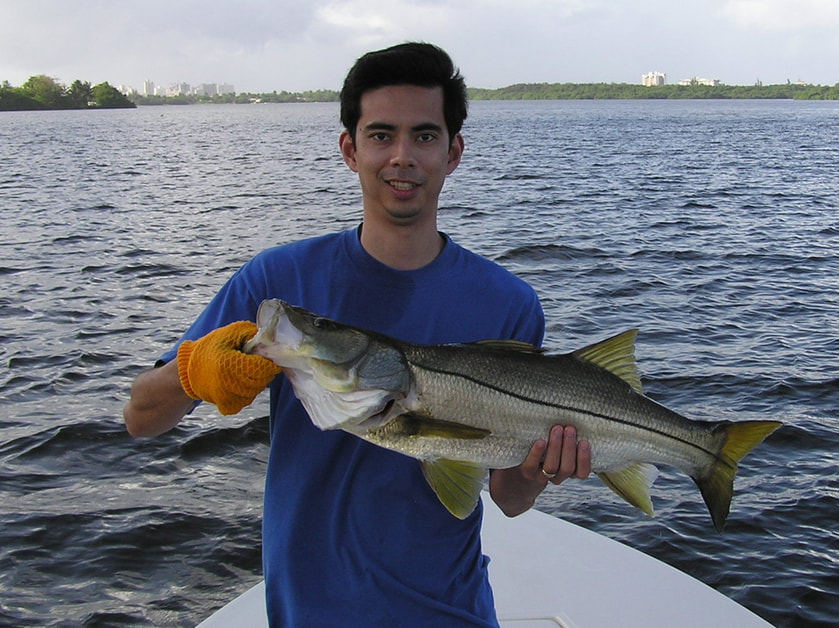
Snook caught on a sardine in Puerto Rico
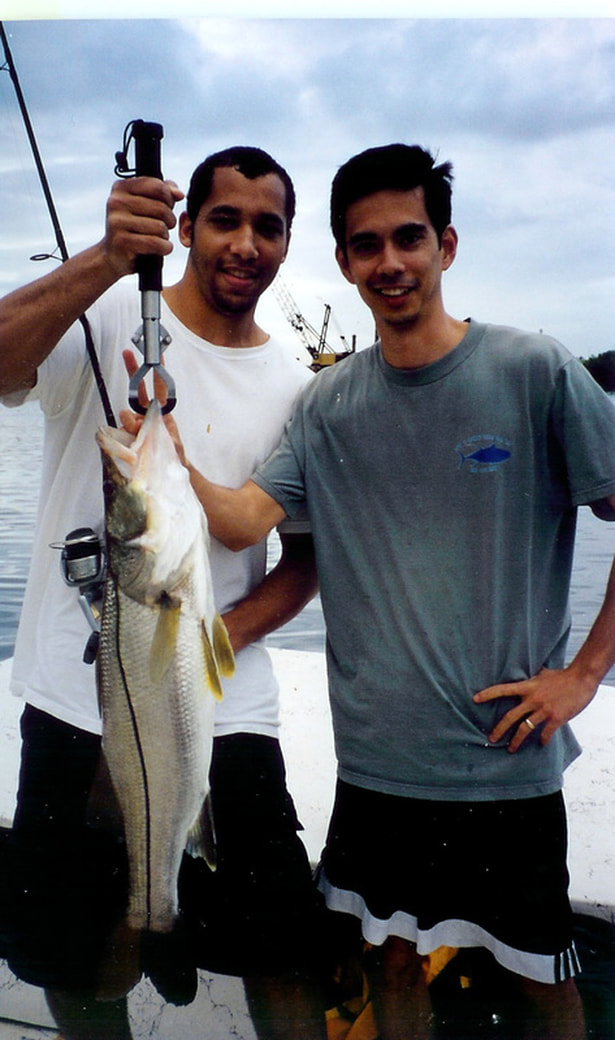
Hefty Snook caught in Puerto Rico
Click on a pic below to enlarge